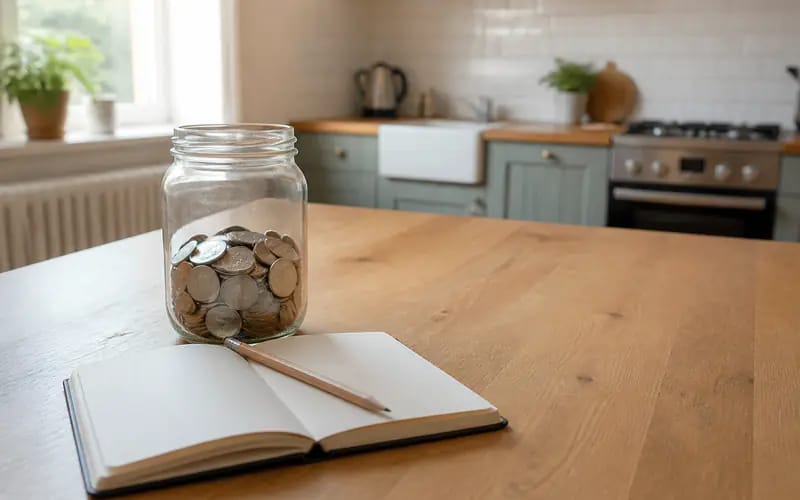

Before 1861, a working man with a spare shilling had a problem. He couldn't put it in a bank – banks weren't for people like him, and the nearest branch might be twenty miles away even if they'd have him. He could hide it in the mattress, which is how it got stolen, or keep it loose in his pocket, which is how it got spent. Saving money wasn't a personal failing back then. It was an engineering problem. There was nowhere to put it.
Then Gladstone had a rather good idea.
The Postmaster Didn't Expect to Be a Bank Teller Either
By 1861, the railways had threaded themselves into almost every corner of Britain. And because the mail now travelled by rail, the Post Office had built something remarkable: a branch in nearly every town and village in the country. Thousands of postmasters sat in thousands of little offices, already trusted to handle letters and parcels and small amounts of cash.
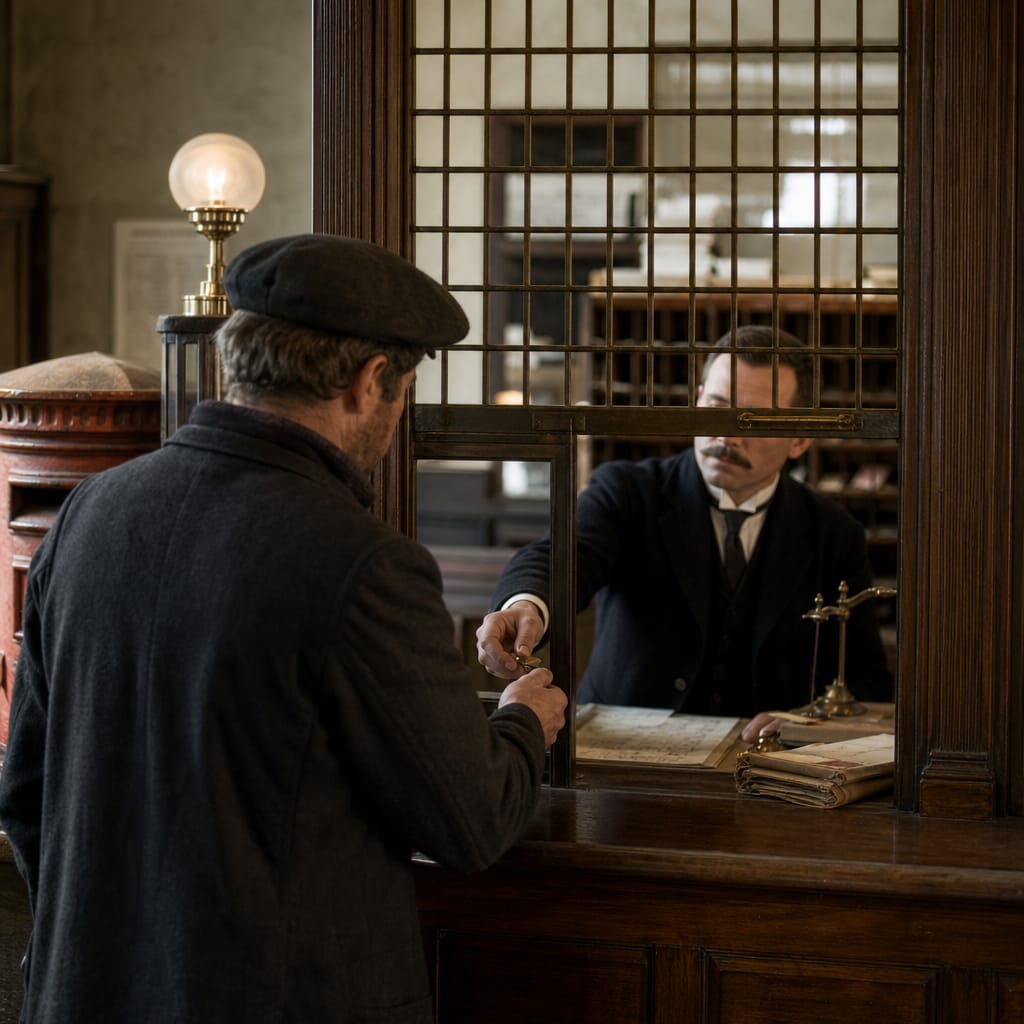
Gladstone looked at that network and opened the Post Office Savings Bank on 16 September 1861.
Overnight, all those postmasters became bank tellers. The minimum deposit was one shilling – not a pound, not a guinea, one shilling – which meant you could walk into the post office on the edge of nowhere and open a savings account. Hundreds of thousands did.
What This Actually Built
Before that September, saving as a widespread habit simply didn't exist for working people. Not because they were feckless, but because the infrastructure for it didn't exist. The moment it did, the money appeared. Savings didn't happen because people became more virtuous. They happened because the mechanism was finally there.
That is where Britain's instinct to "put a bit by each week" actually comes from. It isn't ancient folk wisdom. It's the direct consequence of a Victorian politician bolting a financial product onto a railway network.
We're still living inside the infrastructure those decisions built. For more on the psychology of what we tell ourselves to keep the habit going, The Agreed-Upon Lie That Keeps the Lights On is worth your time.
One Shilling, Which Was the Whole Idea
The one-shilling minimum wasn't accidental. It was calibrated to what a labourer could realistically spare – small enough to feel possible, large enough to make the walk to the post office worthwhile.
That ratio is every sensible budgeting approach since. Small enough to start without pain, regular enough to compound, automatic enough that you stop making a conscious decision each time. The railwayman's shilling became the standing order. The logic hasn't moved.
Frequently asked questions
Did the Post Office Savings Bank survive, or did it disappear long ago?
It became National Savings and Investments – NS&I – which you'd recognise today from Premium Bonds. So yes, it's still there, rebranded, government-backed, and still technically accessible to everyone. Gladstone's machine just changed its name.
Why couldn't working people just use the regular banks that already existed?
Commercial banks in 1861 had minimum deposit requirements that put them firmly out of reach for ordinary wages. They were also geographically concentrated in town centres, which was no good if you lived in a village. And there was a trust issue: the Post Office was a government institution, which felt considerably safer than a private bank that might simply fail.
Was Gladstone being charitable, or was there something in it for the government?
Mostly the latter. The deposits were invested into government securities, which meant the state was effectively borrowing from ordinary working people at a very low rate. Gladstone needed cheap money, and the labourer needed somewhere safe. It suited both.
Does it matter where you save, so long as you save something?
More than you'd think. The Post Office Savings Bank story is a reminder that friction kills saving. When the post office was the only accessible mechanism, people used it. New saving spiked when ISAs launched in 1999. When workplace pensions became opt-out rather than opt-in under auto-enrolment from 2012 – millions of people who'd never saved suddenly started. The habit follows the infrastructure, every time.