

In 1930, Parliament did something that seems obvious now but was, at the time, genuinely radical: it decided that driving was a skill, and that skills could be tested. The Road Traffic Act abolished the national 20mph speed limit (which nobody was obeying anyway) and introduced the driving test. Both moves were part of the same idea – that the person behind the wheel should be competent, and that competence was something the state could define and measure.
Before that, driving was essentially ungoverned self-expression. You got in, you had a go, and if you didn't kill anyone, you were a driver. Afterwards, there was a certificate. A standard. A before and after. The 1930 Act, almost by accident, invented the concept of the qualified driver as a legal and cultural category.
What was actually tested in the earliest driving tests?
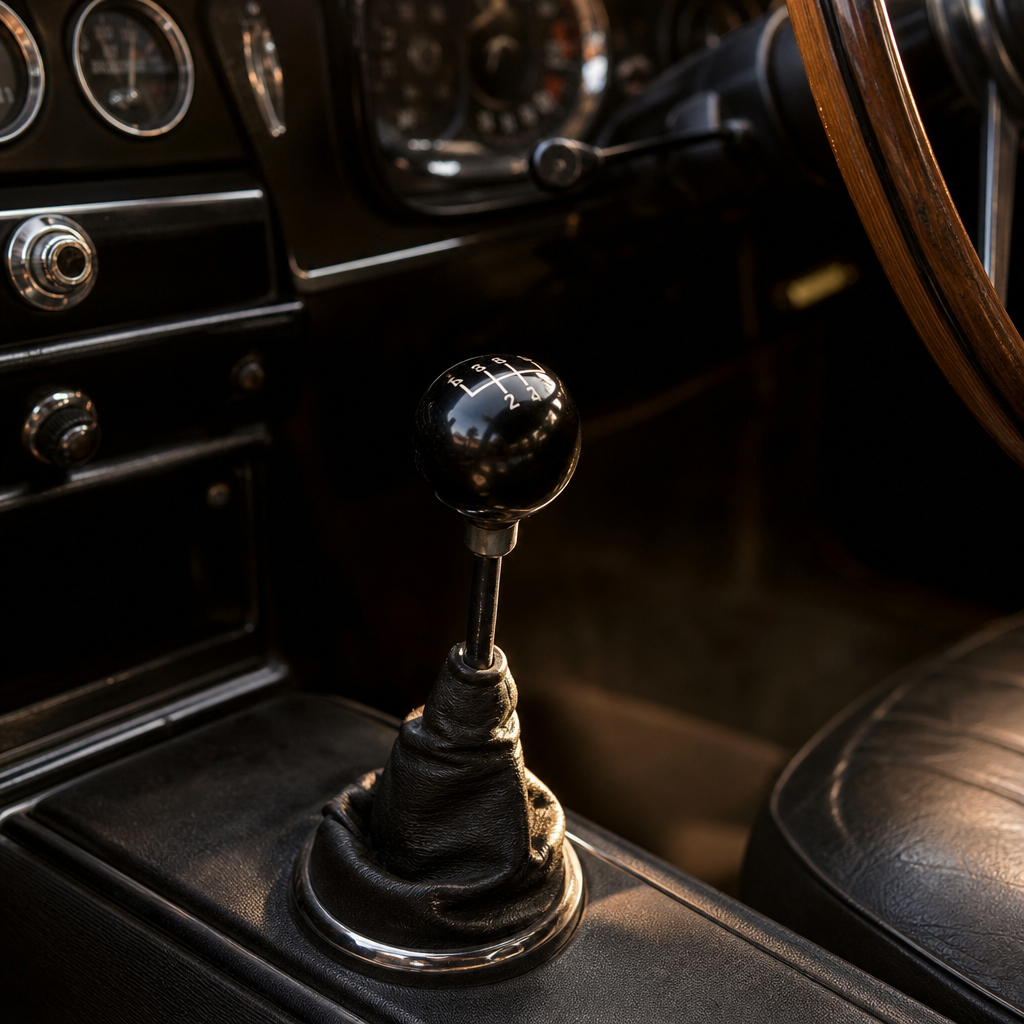
The test needed something to test. What it found was the manual gearbox. Working a clutch, reading the road ahead, selecting the right gear for the right moment – this was coordination, judgement, feel. You couldn't fake it. The examiner sitting beside you would know immediately if you couldn't do it, because the car would lurch, or stall, or roll backwards on a hill and make the whole situation rather embarrassing.
So the manual gearbox became bound up with the whole idea of what a competent driver was. Not because anyone planned it that way, but because it was already there, already difficult, and already a genuine measure of something.
The Automatic's Inconvenient Arrival
When automatic gearboxes started appearing in British cars in any real numbers, they posed an awkward question: if the car was now selecting its own gears, what exactly was the test still testing? Nobody said it out loud quite like that, but the cultural answer was swift and fairly brutal. Automatics were for people who couldn't quite manage. A concession. A workaround.
For decades, passing your test in an automatic meant your licence was restricted to automatics, which was honest enough as a legal arrangement, but it carried a faint whiff of having done the easier paper. The manual licence was the real one. The automatic was the consolation prize.
The 2021 Admission
It took until 2021 for the Driver and Vehicle Licensing Agency to formally separate the manual and automatic licences into two proper, distinct categories rather than treating one as a restricted version of the other. On the surface, a tidy administrative update – underneath, the government finally admitting that the 1930 definition of driving skill had quietly stopped making sense.
Electric vehicles have almost no gearbox to speak of. Modern automatics are faster and more fuel-efficient than most people shifting manually. Insisting that clutch control is the definitive proof of a competent driver is now about as logical as insisting a competent pilot must know how to hand-crank a propeller.
The gearstick did its job beautifully for ninety years as the thing that proved you could drive. It just turned out that what it was really measuring was 1930, not driving.
Questions this raises
- Why was the 20mph national limit abolished in 1930?
- How has the driving test changed since the 1930s?
- Did the test reduce road deaths at all?