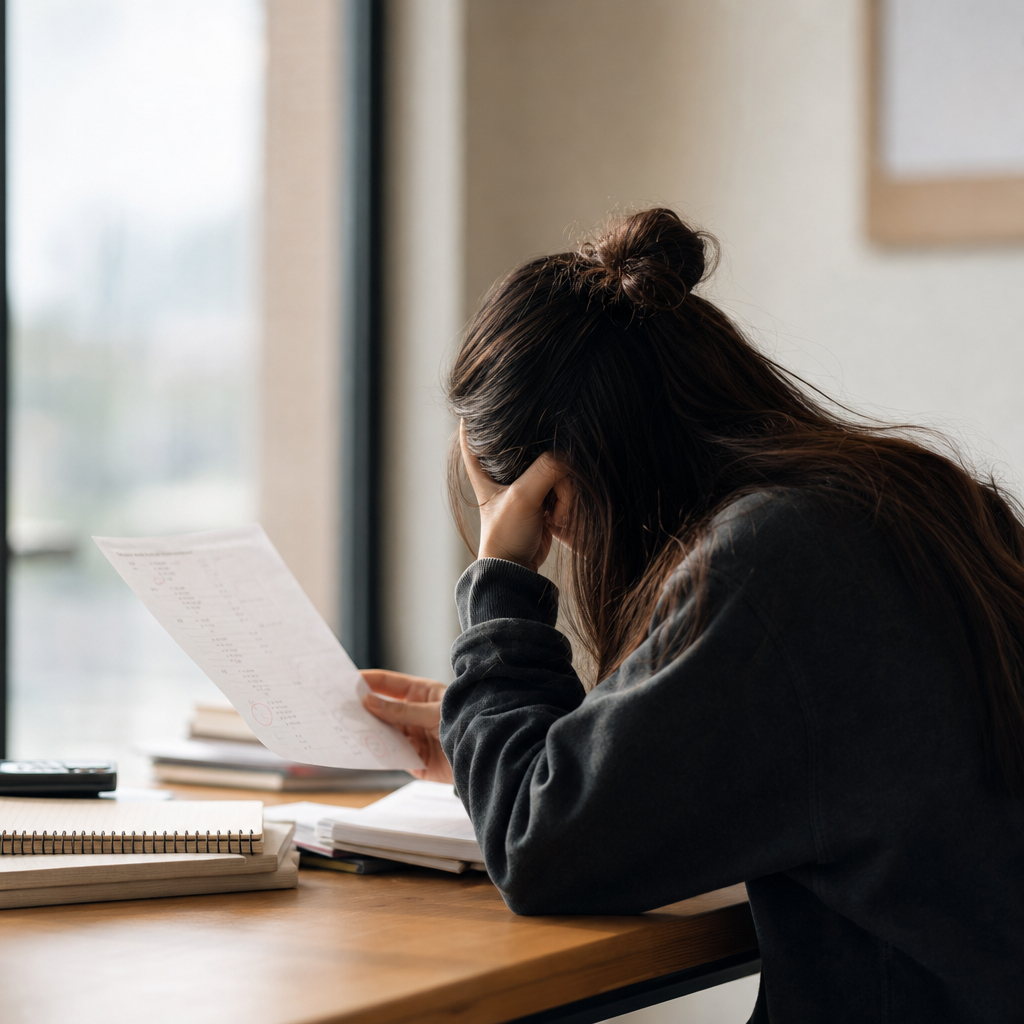

Think about the last time you had to remember a name you'd half-forgotten. Someone from school, a colleague from years ago. You probably didn't find it sitting neatly somewhere, ready to hand. You went looking for it – a face, a classroom, something they used to say – and gradually assembled it from pieces until the name arrived. That fumbling process, annoying as it was, is how memory actually works. Your brain doesn't keep facts the way your phone keeps photos. It keeps routes to them. And every time you travel one of those routes, you make it a little easier to travel again.
This matters for how we think about education, because it means something strange and slightly uncomfortable is true: the act of being tested on something is, in itself, one of the most effective ways to learn it.
The Testing Effect
Psychologists call it the testing effect, and it's been sitting quietly in academic literature for over a century. Meanwhile, schools carried on treating tests as measurement tools – a way of checking how much you've managed to retain after the real learning was done. But retrieval practice, the deliberate effort to drag information back up to the surface, turns out to physically change the brain each time it happens. The neural pathway that gets used gets stronger. This is not a metaphor, by the way – the connections between neurons are physically reinforced with each activation, the dendrites (the little branching receivers) growing more sensitive, the signal travelling faster and more reliably next time.
A Path Through Long Grass
Picture a path through a long field of grass. Walk it once and you've barely flattened anything. Walk it every day for a month and it becomes a clear track. Walk it for years and you could find it at midnight. That's the difference between reading a fact and having to retrieve one. Reading the fact keeps the grass as it was.
The really interesting bit is what happens at the far end of a very well-used path. A pianist sight-reading a piece for the first time, a driver pulling smoothly away from a junction, a child who simply knows – without thinking, without counting – that seven eights are fifty-six. The route has been used enough times that conscious effort has retired from the job entirely. It's not recall anymore. It's automatic. If you're curious about how that kind of deep automation works in a very different system, this piece on Your Automatic Gearbox Is Making Decisions Before You've Finished Thinking explains the parallel rather well.
Does re-reading your notes work at all?
None of which means cramming before a test is a great strategy, because cramming is passive re-reading dressed up as effort. What works is closing the book and trying to say back what you know – badly at first, in fragments, with gaps. Those gaps are not embarrassing. They're exactly where the learning is.
So if you're helping a child revise, or trying to learn something yourself, and you have a choice between reading it again or testing yourself on it, test yourself. Every time you fail to remember something cleanly and then find it, the path gets a little clearer.
Questions this raises
- How often should you test yourself when revising?
- Why do flashcards beat highlighting a textbook?
- Is testing useful before you have learnt the material?