
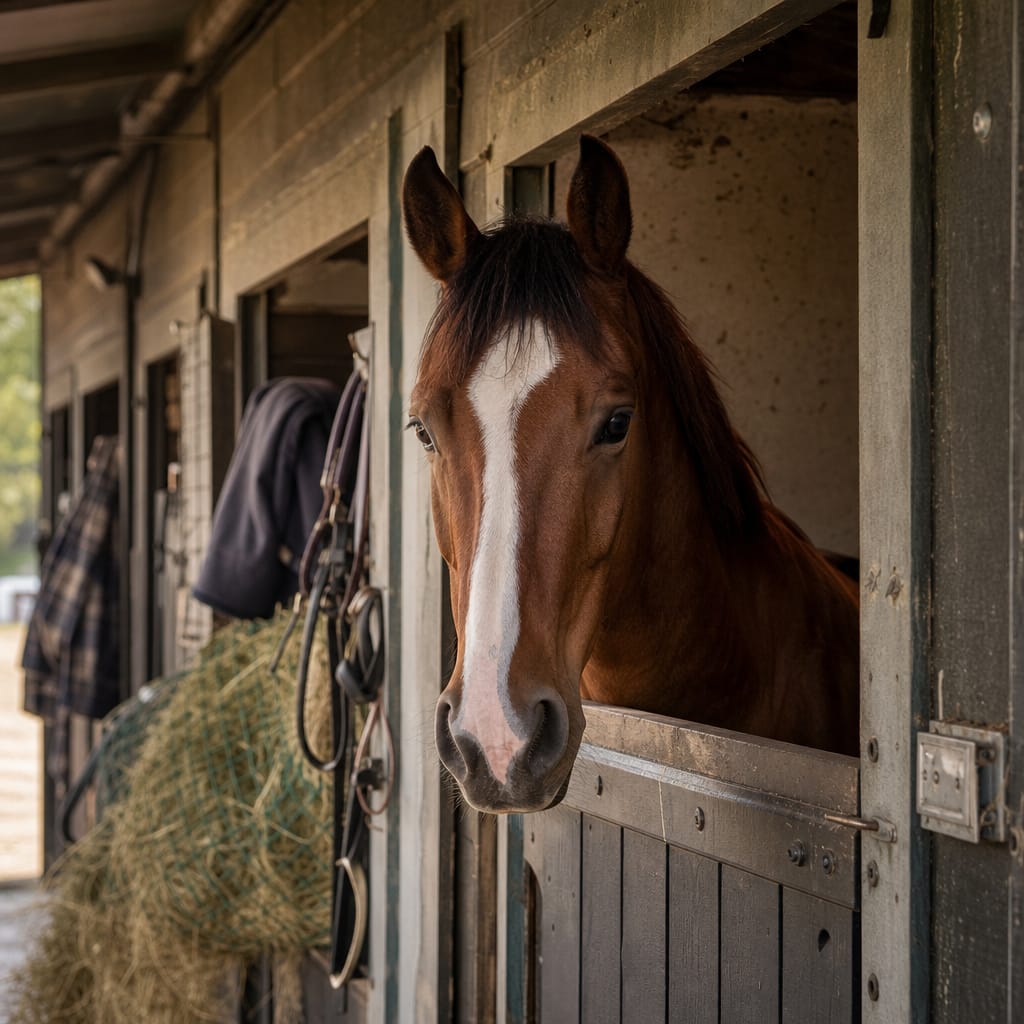

Somewhere in Britain right now, a woman in muddy jodhpurs is scraping out a stable at half past six on a Saturday morning. She'll be back this afternoon to do it again. Her horse eats roughly £300 a month in feed and hay alone, the livery yard takes another £400, shoes come round every six weeks, and the vet bills arrive with the cheerful unpredictability of British weather. She hasn't been on a foreign holiday in four years. She is also, very possibly, worth less than nothing – in the technical sense that her mortgage is larger than her house is currently valued at.
The “Negative House Equestrian”
This is the "negative house equestrian." It sounds like a punchline, but it describes a genuinely sizeable slice of British life: households running a horse while sitting in negative equity, which is a collision of aspiration and financial precarity that says something rather interesting about how people actually decide to spend money.
Centuries of Freight
The horse in Britain carries centuries of freight. Historically it meant land, and land meant power – you couldn't just nip to a market and buy yourself into the cavalry officer class. The animal was a class marker as explicit as the house itself. That symbolism never quite dissolved. It just democratised in a thoroughly British, slightly chaotic way, so that by the late twentieth century you had teachers, nurses, and warehouse managers keeping horses at livery yards off the A-roads of Wiltshire and Cheshire and Northumberland, mucking out next to people who genuinely did have paddocks to go home to.
Identity Spending
What's happening here has a name in behavioural economics: identity spending. It's the category of outlay that doesn't function like ordinary consumption. You don't buy a horse the way you buy a sofa – weighing it up, checking your budget, deciding it offers sufficient value. You keep a horse because not keeping one would mean being a different person. The economist Richard Thaler described how people ring-fence certain expenditures from ordinary financial logic, treating them as simply what they do, rather than something they chose. The horse falls into that ring-fenced category completely. Feed bills rise, the equity on the house wobbles underwater, and still – the horse stays.
What makes it interesting rather than just puzzling is that it isn't really irrational. Not when you factor in what the horse is actually providing. The 6am stable run is also an identity, a community, a reason to be outside in all weather, a skill that takes years to develop properly, and a relationship with an animal that is famously demanding and occasionally sublime. Against a second bathroom or an investment ISA, the horse loses on paper and wins everywhere else.
The Livery Yard
The livery yard is quietly one of the stranger social institutions in Britain – a place where class markers dissolve a bit in shared muck, where the woman who event-rides at weekends and the woman who just hacks on Sundays are both on their knees pulling a hoof pick through the same clay-heavy soil. That's not nothing.
Questions this raises
- What does keeping a horse actually cost per year in Britain?
- How much is horse insurance and does it cover vet bills?
- Is DIY livery much cheaper than full livery?
- Can you sell a horse quickly if money gets tight?