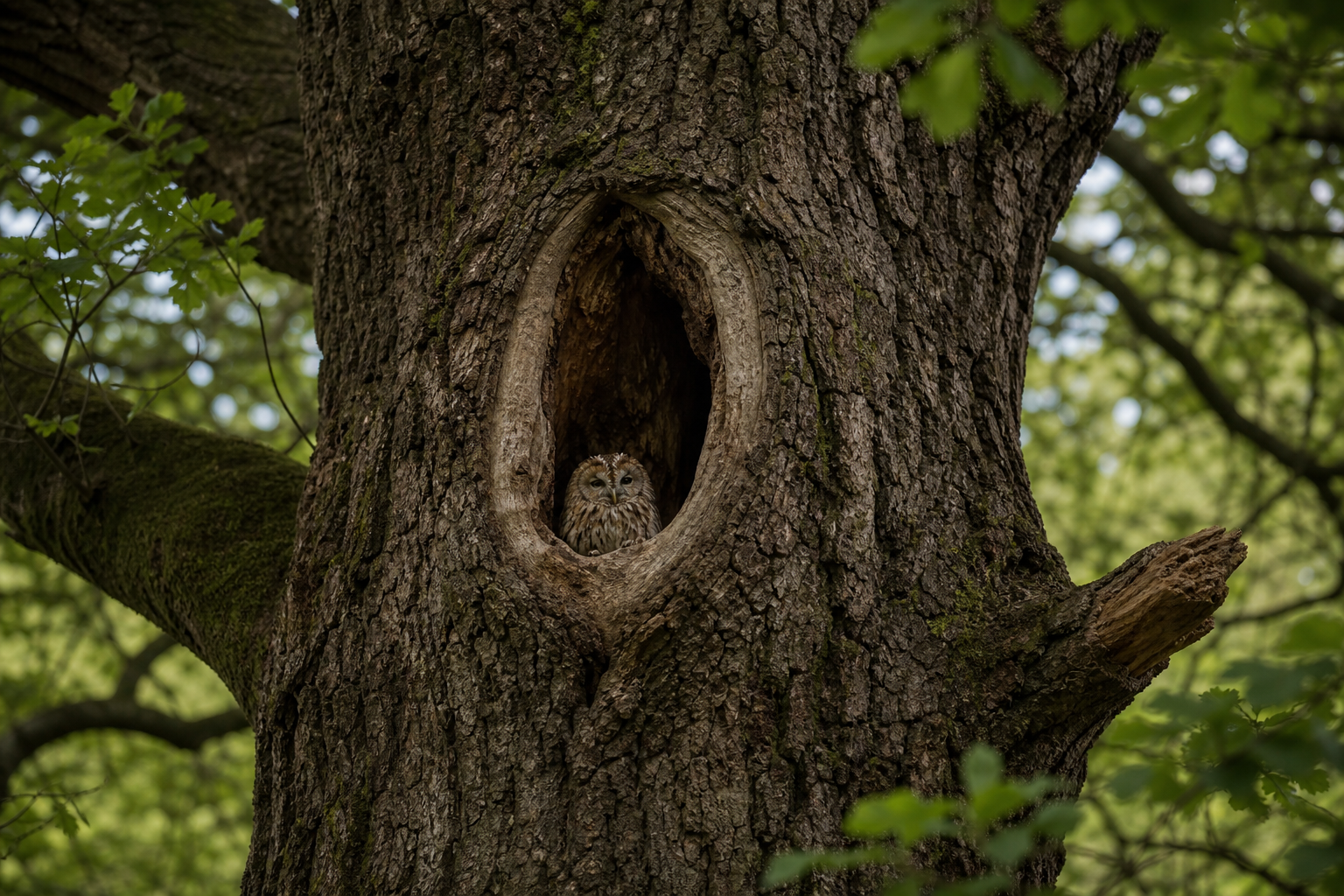

Somewhere in an English woodland, an oak tree is doing something that no lifestyle guru has ever managed to put on a vision board. It is, without meaning to, running a hotel for several hundred guests simultaneously. Beetles in the bark. Fungi threading through the roots. Bats roosting in the hollows. Lichens on every limb. The whole tree is a living city, and the oak didn't plan any of it. It just kept growing, kept producing, kept being complex – and complexity turned out to be the most generous thing it could offer.
Sustainability as Subtraction
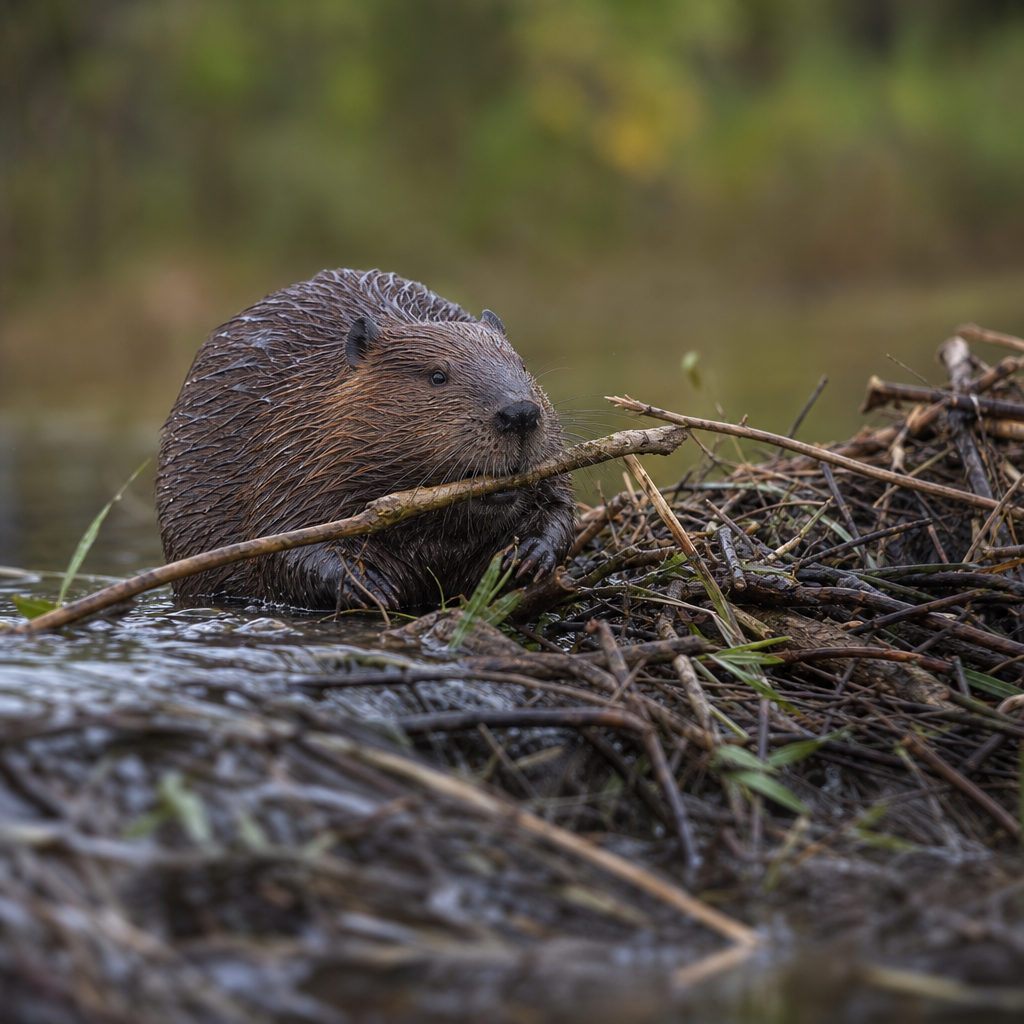
Most of us think about sustainability as a kind of subtraction. Use less. Waste less. Leave less of a mark. The oak doesn't work like that at all. Its version of sustainability is accumulative: it builds over time, and every bit of what it builds becomes a resource for something else. The dead wood doesn't get cleared away; it becomes a home. The fallen leaves don't disappear into a bin; they rot into the soil that feeds the tree's own roots. Nothing leaves the system. Everything becomes something.
What the Oak Model Would Look Like
What would a human life built on that model actually look like? Not one that consumes less – though that helps – but one that generates more than it uses. Where what you produce, over time, quietly becomes someone else's resource.
A skill you've had for decades, explained to a younger colleague, doesn't cost you the skill. A garden maintained for thirty years doesn't diminish with the maintenance; it deepens. A friendship that goes back far enough starts to hold a kind of history that both people draw on. These are all versions of the oak's trick: value that compounds because it was built rather than bought, and that can be shared without being spent.
You can read more about what the oak's accidental ecosystem actually looks like – in very satisfying detail – at The Oak Tree Is Running a Hotel It Never Asked to Build.
The modern version of lifestyle, at least the one that gets sold back to us on every platform going, runs on roughly the opposite logic. It is high-throughput: experiences consumed quickly, objects replaced fast, habits adopted and dropped before they have a chance to root. The cost isn't just financial. It's structural – nothing gets the chance to become complicated, layered, useful to anything else.
Three Hundred Years to Get Going
The oak tree takes about three hundred years to reach the point where it's hosting its full complement of lodgers. We don't have three hundred years, obviously. But the principle scales. The things that generate the most – that become genuinely useful to people around you, that hold their value past the first season – are nearly always the ones you stayed with long enough to let them get complicated.
Which is a slightly strange way to think about lifestyle. But then the oak didn't choose to run a hotel either, and look at the place.
Questions this raises
- How can a garden support more species rather than fewer?
- Does planting a single oak genuinely help local wildlife?
- Why does complexity support more life than tidiness?
- Which native trees come closest to an oak for wildlife?