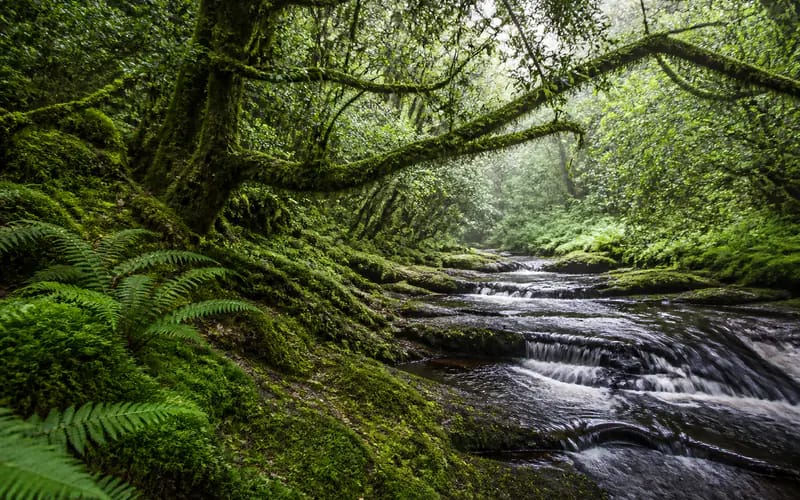

Stand next to a decent oak – one of the old ones, with bark you could lose your fist in – and you're not really standing next to a tree. You're standing next to a building. A large, badly managed, extraordinarily successful building that has been open for business continuously since before anyone alive can remember, and whose guest list currently runs to somewhere north of 2,300 species. The oak didn't plan this. It didn't put up a sign. It just grew, and everything else moved in.
The Basement: Roots and Fungal Networks
The basement starts underground, where the oak's roots are tangled up with fungi in an arrangement so old and so involved it makes a fifty-year marriage look like a first date. These mycorrhizal fungi thread themselves through the soil and around the root tips, trading minerals – phosphorus especially – for sugars the tree produces through its leaves. The tree gets nutrients it couldn't extract alone. The fungi get fed. Neither could do quite as well without the other, and neither, as far as we know, is particularly grateful about it.
The Deadwood Floor
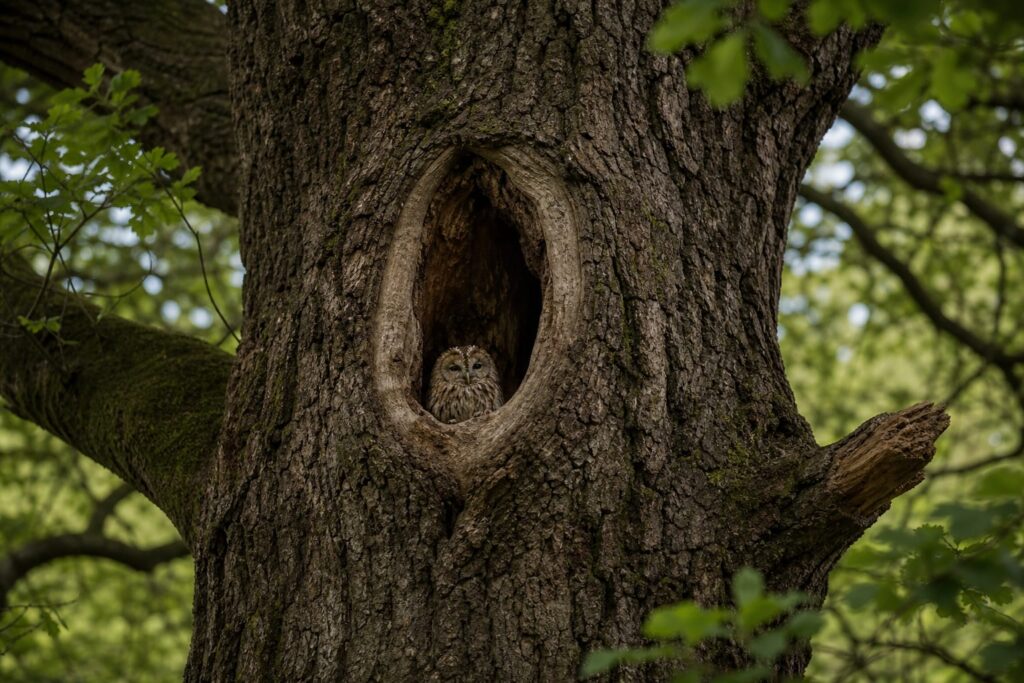
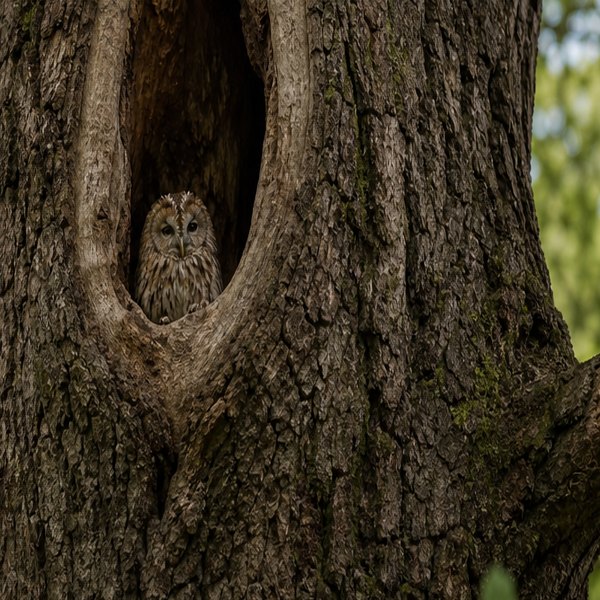
Come up through the soil and you hit the first above-ground layer: the deadwood. An oak that's been around long enough will have dead branches, hollows, sections of bark that have loosened and started to lift. This is prime real estate. The lesser stag beetle is in there, and so are dozens of species of hoverfly whose larvae only breed inside rotting heartwood. A hollow in an old oak isn't a sign of decay – it's a penthouse. Bats roost in the bigger ones. Owls nest in them. The tree doesn't need to be pristine to be valuable; actually the more battered and complicated it looks, the more it's doing.
Who gets which room
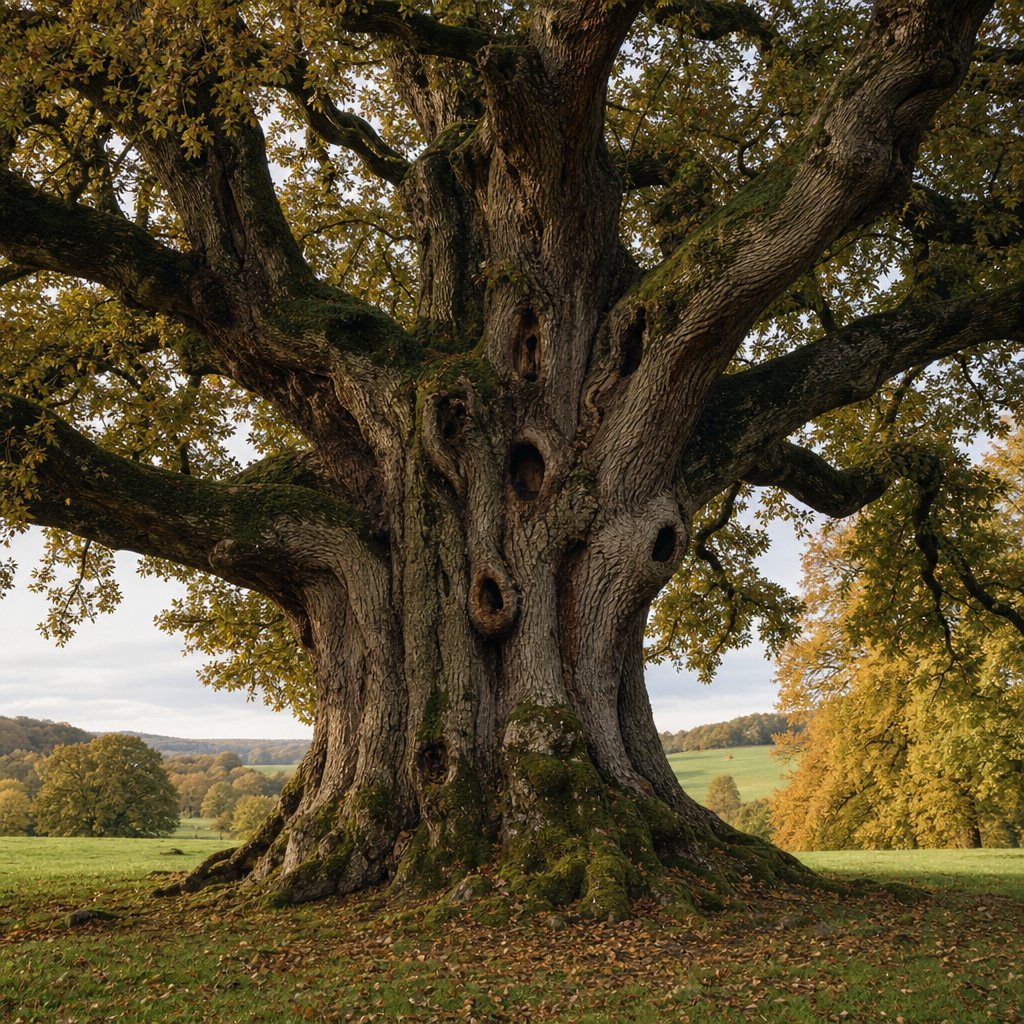
Hollows in old oak trees are not allocated randomly. Each cavity-nesting species requires a hole of a specific size, height and aspect, thus a large, old tree with many holes can be home to several species of very different kinds, such as tawny owls in the largest chambers and nuthatches and tits in smaller holes. Bats occupy the narrow cracks and gaps behind loose bark that nothing else would use. Young smooth oak trees have few or no such holes, which is one reason why ancient trees matter much more to wildlife than their numbers would suggest.
The Bark Is a Neighbourhood
The bark itself is a neighbourhood. Lichen colonise the drier, brighter patches on the south-facing side, while mosses prefer the damp shadier bits lower down. Spiders hunt across both. There are mites in the crevices that feed on the fungi growing in those same crevices. You could write a full inventory of just the bark and run out of space before you ran out of species.
Leaves, Caterpillars and Timing
Then there are the leaves, and the oak's relationship with the caterpillar is the thing that tends to surprise people when they first hear the numbers. Over 400 species of moth and butterfly use oak as a larval food plant. Four hundred. The most famous of them is probably the oak tortrix moth, which times its hatching almost exactly to the opening of the first oak buds in spring – not to the date on the calendar, but to the actual warmth of the actual spring as it arrives. If the spring is early, the moths are early. The caterpillars need the young, soft leaves before they toughen up, and the blue tits need the caterpillars to feed their chicks. The whole chain moves together, or it's supposed to. When springs shift unpredictably, the caterpillars and the birds fall out of sync, and the chicks go hungry. The oak isn't just a hotel; it's a clock. Half the guests have set their calendars by it.
A Word on Galls
The galls are worth a mention before we go: those hard little brown spheres you see on oak leaves and twigs are made by gall wasps, which inject a chemical into the leaf tissue and cause the tree to grow a perfectly shaped nursery around the egg. The tree builds the room, and the wasp's larva lives inside it. Then – this is the bit that always gets people – other insects arrive to parasitise the gall wasp larva through the wall of the gall without ever opening it. The hotel has guests, and the guests have their own uninvited guests, and the whole thing runs on without the tree having any say in the matter at all.
The acorn crop and the bird that plants it
In autumn the oak runs a food bank. A mature tree can drop many thousands of acorns in a good year, and these are eaten by squirrels, wood mice, deer, badgers and a host of birds. But most of these are eaten before they have a chance to germinate. The jay is different and buries many of the acorns it finds in autumn to return to them in winter. Some of these are never returned to and are perfectly placed to sprout into a new sapling. The jay has been spreading oak for centuries in this way, none the wiser that it has been used as a carrier of the young trees to new ground away from the shade of the parent tree.
Large trees such as oak also move large quantities of water through them. Water is drawn up from the soil by the roots and much of this is lost through the leaves as vapour. This is part of the reason old parkland trees can feel cooler to stand under on a summer’s day than an open lawn.
Next time you're walking past a big old oak – especially a scruffy one with hollow bits and interesting bark and leaves full of holes – try reading it as what it actually is. Those holes mean the caterpillars were there. The caterpillars mean the birds were there. And the birds mean the whole layered, noisy, completely accidental hotel is still open.
Questions this raises
- Which UK tree supports the most wildlife after oak?
- How long does an oak take to build up that many species?
- Do dead and fallen oaks still support as much wildlife?
- Why do other native trees host so many fewer species?