

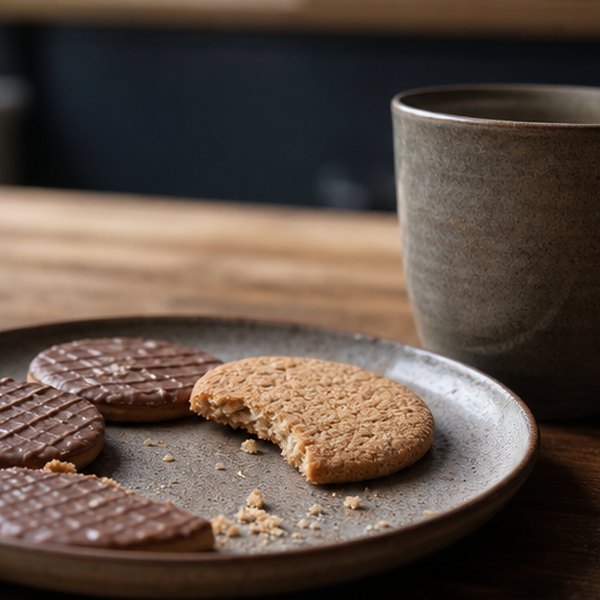
There's a version of habit-building that looks like this: you start strong, keep it going for a fortnight, then one grey Tuesday you eat four biscuits at 11am and miss the gym and feel, by about 7pm, that you have personally failed at being a human being. You go to bed a bit deflated and tell yourself you'll start again Monday.
Here's what was actually happening on that Tuesday: your brain was doing exactly what it needed to do.
Does missing one day really break a habit?
Neuroscience has spent a while poking around inside habit loops, and one of the stranger things it's found is what happens in the moment you slip. When you do something that doesn't match your expected behaviour – skip the run, eat the biscuits, break the streak – the brain fires what's called a prediction error signal. It's a small chemical spike. A kind of internal "hm, that's odd." And that spike is not a sign the habit is unravelling. It's the brain updating. Noticing. Recalibrating. The stumble, in other words, is not an interruption to the learning. It's the actual mechanism.
This is not so different from what happens when you're tested on something you've learned – or tried to learn. The same retrieval-struggle principle applies: the moment you have to fight for the right response is the moment the neural pathway gets properly carved. You can read the same chapter four times and feel like you've absorbed it, but you haven't really tested anything. (There's a piece on exactly this, in the context of studying and exams, at The Test Isn't the End of Learning. It's Where Learning Actually Happens.) The same logic drops neatly onto every Monday-restart resolution you've ever made.
The Days You Fail Are the Informative Ones
What that means for habits is genuinely strange. The days when you comply are almost passive – the brain notes it, confirms the pattern, moves on. But the day you don't comply, and then catch yourself, and make a decision about what comes next? That is, neurologically speaking, where the habit is being built most actively. How you respond to failure is the only practice that matters, because it's the only moment the brain is paying full attention.
Don’t Treat the Slip as a Grade
The trap is treating the slip as a grade. Something to make up for. And so the response tends to be either punishment (I'll do double tomorrow, restrict the food, write a stern note to myself in a journal) or surrender (well, that's the streak gone, may as well order a takeaway). Neither of these is the brain-useful response. The useful one is boring and small: notice what happened, shrug, and do the next right thing anyway – not as penance, just as the next step. The streak was never the point. The point was what you were practising.
If Tuesday was biscuits and no gym, Tuesday was also the day you had the best possible opportunity to rehearse not spiralling. That's not a consolation. That's genuinely the job.
Questions this raises
- How many days off before a habit is genuinely lost?
- Why does feeling guilty make a relapse more likely?
- What should you do the day after you slip?