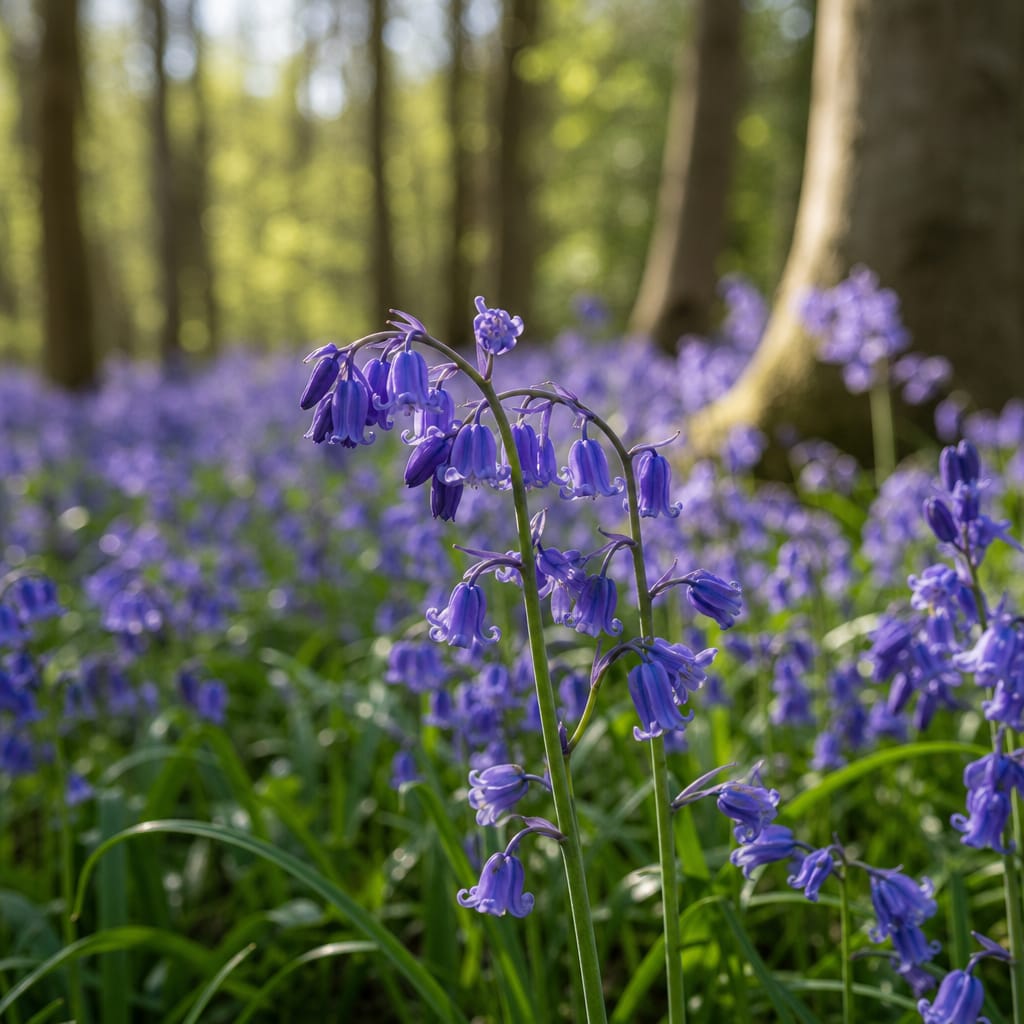

Stand at the edge of a bluebell wood in late April and something slightly uncanny happens. The colour seems to come off the ground like a mist, too vivid, too even – almost like someone has dropped a filter over the scene. Your brain keeps telling you it isn't quite right. And honestly? Your brain is correct.
Colour Isn’t a Property of a Thing
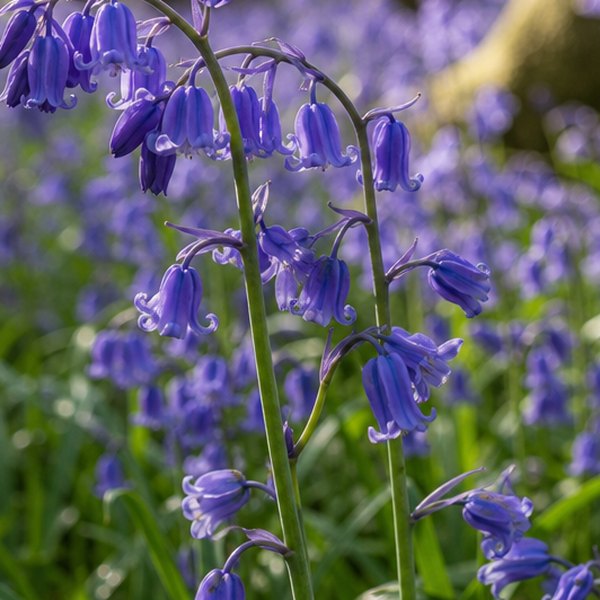
Here's the strange physics of it. Colour isn't a property of a thing, it's what bounces off it. A red post box absorbs most of the spectrum and throws the red back at your eyes. Bluebells absorb much of the red and green light that falls on them and reflect the blue and violet back at you, from thousands of flowers at once. That wall-to-wall reflection is why the whole floor of the wood seems to radiate rather than just sit there. You are, in a very literal sense, being hit by more blue light than you would be from a single flower on a table. Which explains the glowing. Which explains why it doesn't look quite real.
But here's the genuinely odd part: the bluebell didn't develop that colour for you.
Flowers Are Advertisements for Insects
Flowers are essentially advertisements, and their target audience is insects, mainly bees. Bees see ultraviolet light, which sits entirely outside what the human eye can register. What looks to us like a sweetly uniform purple-blue bell is, under UV, a much more complicated picture – patterns of contrast, markings, arrows of a sort, pointing inward toward the nectar. The petal isn't a petal to a bee, it's a landing instruction. We see the poster. The bee reads the text.
And Plants Have No Eyes at All
What makes this even more peculiar is that plants have no eyes. They didn't "choose" these colours in any conscious sense. Over an almost incomprehensible stretch of time, flowers producing patterns bees happened to visit more often got pollinated more often and so got to reproduce. The colour, and the UV pattern beneath it, became the accumulated record of which flowers bees preferred – written in petals across millions of generations. The bluebell looks the way it does because of bee taste. Not ours.
So next time a bluebell wood stops you in your tracks, remember: you're reacting to a frequency show aimed entirely at something else. A communication system you can half-see and not quite decode, playing out across every inch of the forest floor. The bit that makes you catch your breath is just the spillover.
Questions this raises
- Why do bluebells look different in photographs?
- When is the best time to visit a bluebell wood?
- Are Spanish bluebells a threat to our native ones?
- Is it illegal to pick bluebells in Britain?