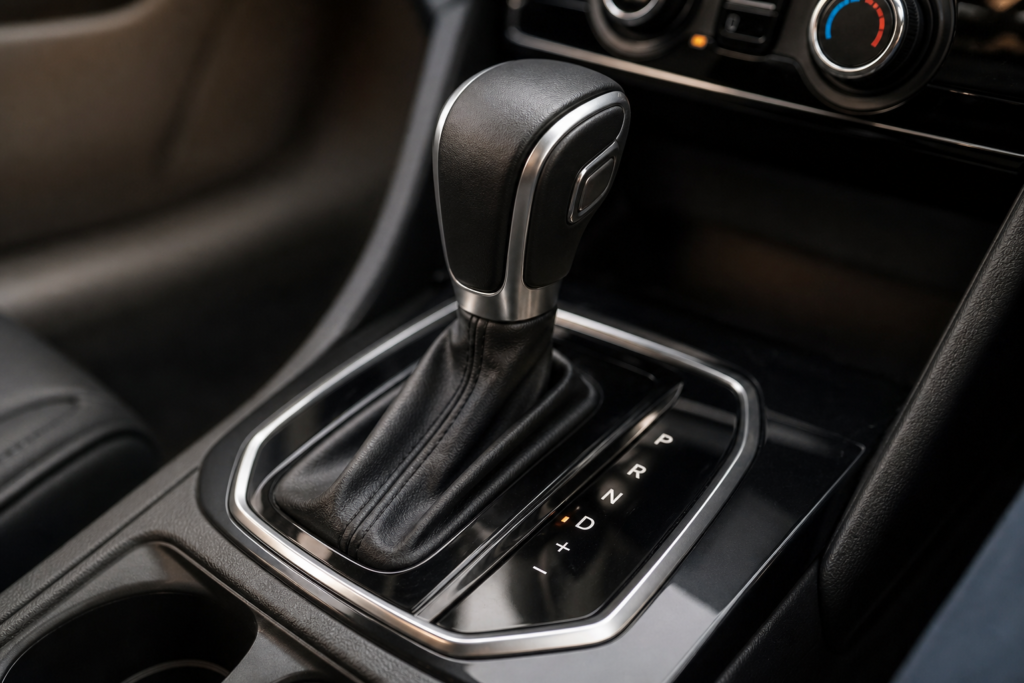

You press the accelerator. A gear changes. Simple, right? Except between those two events, something happened faster than your brain could register the sensation in your foot, process it, decide what it meant, and send a signal back down. Your transmission control unit had already read four separate things simultaneously, run them through a decision tree, and moved on. You were still in the middle of thinking "I should probably speed up a bit" and the gearbox had already done it.
This is what makes modern automatics feel almost spooky to drive after years in a manual. It isn't that the car is doing the work for you, exactly. It's that it's doing it in a window of time you don't have access to.
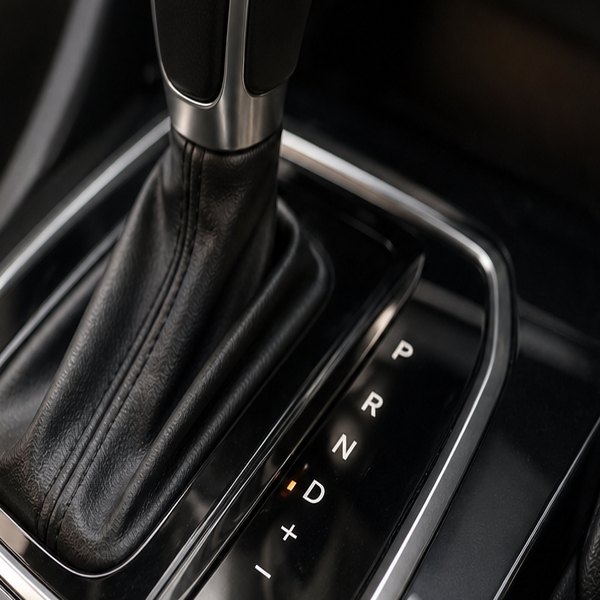
What does a transmission control unit measure?
At any given moment, the transmission control unit is watching throttle position (how far you've pushed the pedal, and how fast), road speed, engine load, and gradient – all at once, in a continuous loop. It's running something close to a permanent "if this, then that" conversation with itself: if throttle is at 40%, road speed is 55mph, gradient is flat, and engine revs are sitting here, then fifth gear makes sense. Half a second later, those numbers shift and it checks again.
The whole cycle runs in milliseconds. Human reaction time to a visual stimulus is somewhere around 200 to 250 milliseconds, and the transmission control unit is making gear selections in a fraction of that. Not smarter than you – just faster at this one very narrow job, the way a calculator isn't smarter than a mathematician but can certainly add quicker.
Why motorways feel effortless and car parks feel annoying
The same speed that makes an automatic brilliant at 70mph is exactly what makes it occasionally maddening at 7mph. On a motorway, the numbers feeding into the system are stable and predictable: steady throttle, consistent speed, flat road. The gearbox settles into a gear and stays there. Smooth, quiet, almost telepathic.
In a car park, you're doing something the system finds genuinely difficult. You're crawling, stopping, inching forward, tapping the accelerator, lifting off, tapping again. The throttle signal keeps flickering and the control unit keeps re-evaluating. Sometimes it picks second, sometimes first, sometimes it can't quite commit – and you get that faint hunting sensation, a slight lurch as it changes down, reconsiders, and nearly changes back. The gearbox isn't broken. It's just responding to genuinely ambiguous data at tremendous speed, which produces the same result as indecision would in a human.
Sport mode is essentially you telling the car to stop second-guessing you: hold the gear longer, change up later, stay in something punchy. The control unit's logic doesn't change, but the thresholds do.
The bit that makes the whole thing tick
Underneath all of this is a component called the torque converter, which sits where a manual car's clutch would be. Instead of a physical plate that grips and releases, a torque converter uses fluid – transmission fluid spinning inside a sealed housing – to transfer power from the engine to the gearbox. At low speeds, it lets the engine and gearbox spin at slightly different rates, which is why an automatic can creep forward in a car park without you touching the accelerator. At higher speeds, a lockup clutch inside the converter engages to make the connection rigid and stop the energy loss. Automatically, invisibly, and again – faster than you'd notice.
It's also why automatic gearbox fluid matters more than most people realise. The fluid isn't just lubrication; it's the medium through which power is physically transferred. Old, degraded fluid changes the way the torque converter behaves and can make the whole system feel vague or sluggish. And honestly, knowing how the things around you work – rather than just assuming they'll get on with it – tends to save you money and hassle in the long run. How to create a WFH office without losing a bedroom is a good example of that same thinking applied somewhere else entirely.
The next time your automatic gearbox does something that feels almost psychic on a dual carriageway, that's not magic. It's just a very fast calculator that's been thinking about your speed, your throttle, your engine, and the road since before you pressed the pedal.
Questions this raises
- Why does my automatic hold onto gears going uphill?
- Can a modern gearbox learn your driving style?
- How much does it cost to replace a transmission control unit?